90% of creators never send a report after a campaign — that one page is what wins the next deal
inflee team
8/30/2026
Post the sponsored content, get paid, done. That's where most creators stop — and then never hear from that brand again.
Creators who get rebooked again and again have one thing in common: they send a report when the campaign ends. Unasked, at no extra charge, on their own. Why is it so powerful?
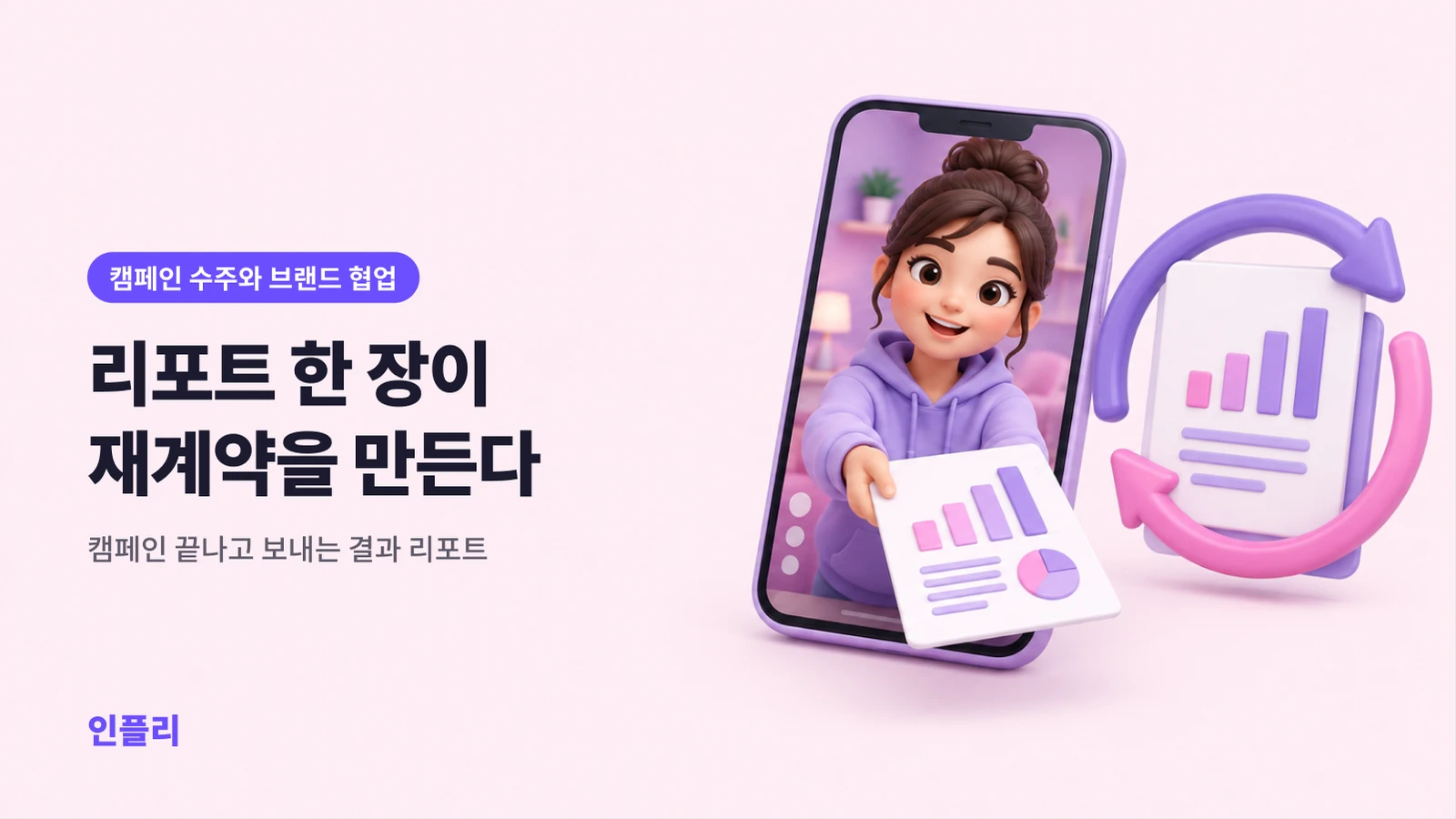
Think about the brand manager. They have to report to their boss on what the sponsorship spend achieved, and they need evidence: "we worked with this creator and here's what happened". If the creator sends a report without being asked, the manager's job gets easier. Nobody turns down a creator who makes their job easier. One page becomes the reason to say "let's work with them again". Here is an influencer campaign report template you can reuse.
This guide isn't about moving the relationship up a level, like becoming an ambassador. It's about the practical job of writing the report right after a campaign — with a copy-ready template.
What brands really want to see in a report
Creators usually just say "it got this many views". Brands want more than that. Split it into four layers:
| Layer | Metrics | What the brand judges from it |
|---|---|---|
| Reach | Views, impressions, accounts reached, unique reach | "How many people did it reach?" |
| Engagement | Likes, comments, saves, shares, completion rate | "Did the people who saw it react?" |
| Conversion | Link clicks, profile visits, coupon redemptions, sales or enquiries | "Did it lead to action?" |
| Qualitative | Standout comments, overall sentiment, brand mentions | "What did people say?" |
The key is to show all four layers, but put the one that matches the campaign's goal first.
- If the goal was awareness → reach and engagement first
- If it was sales or traffic → conversion (clicks, coupons) first
Ask before the campaign starts — "is the goal awareness or traffic?" — and you'll know where to focus the report.
Where to capture the numbers
Most of the data you need is already in places you can access.
- Instagram: professional account → post or Reel insights (reach, saves, shares, profile visits, link taps)
- YouTube: Studio → video analytics (impressions, click-through rate, average view duration, watch time)
- TikTok: video analytics (views, completion, average watch time, shares, saves)
- Link results: the brand's tracking link, exclusive coupon or promo code usage (ask the brand)
Tip: take screenshots at 48 hours and 7 days after posting. Short-form spreads fast early and mostly settles within a week. Comparing the two makes the report far more convincing.
If you're not sure which of these numbers matter most, read how to read Instagram Reels insights first — saves and shares carry more weight than likes. Free Instagram insights can keep each post's history so you're not scrambling for screenshots later.
Report structure — one page is enough
Longer isn't better. Managers are busy. One page, or three slides, is ideal. In this order:
- Headline: the campaign's key result in one sentence
- Campaign overview: brand and product, content type, posting date, goal
- Key metrics: reach, engagement and conversion numbers (table or cards)
- Qualitative highlights: three or four screenshots of standout comments, overall mood
- One insight: "here's why it worked, and here's what would make it better next time"
- Next proposal (the rebooking hook): what you could do next
The last two separate amateurs from professionals. Numbers alone make a "report"; add interpretation and a next step and it becomes a partner's proposal.
A copy-ready report template
Copy this and fill in the blanks.
[Brand] × [Your name] — campaign results report
Headline
Seven days after posting, the Reel reached [X] views and [X] saves, exceeding the goal (product awareness).Campaign overview
- Brand / product: [ ]
- Content: one Instagram Reel + two Stories
- Posting date: [date]
- Goal: awareness for the new product
| Key metric (7 days after posting) | Result | Note |
|---|---|---|
| Views | [ ] | +[ ]% vs. my usual |
| Accounts reached | [ ] | [ ]% non-followers |
| Saves | [ ] | Save rate [ ]% |
| Shares | [ ] | |
| Completion rate | [ ]% | |
| Profile visits | [ ] | |
| Link taps | [ ] | [ ] coupon uses |
Qualitative highlights
- "Where can I buy this? Link please" ([ ] likes)
- "If you recommend it, I trust it" ([ ] likes)
- Many comments mention good value for money and intent to buy againInsights
- [ ]% of reach came from non-followers, so it worked well for reaching new people.
- The save rate was especially high, which suggests viewers are considering a purchase.
- Next time, a before-and-after format should strengthen conversion.Next proposal
Building on this response, I'd suggest a two-part series (how to use + review) timed for [season]. If you're interested, I'll send an outline.
Closing lines that lead to the next deal
Don't stop at sending the report. One sentence that opens the next step is what gets you rebooked.
- When results were strong: "The response was great — following up with a second post while the momentum is there could be really effective. Could I send you a quick outline?"
- When results were mixed: "Looking at the data, I think a [format] would fit better next time. I learned a lot from this campaign and would love to apply it."
- When you're aiming for a longer partnership: "Brand recall grows with steady exposure over about three months rather than a one-off. I'm always open to talking about a monthly collaboration."
Even with mixed results, sending a report is better than silence. Honest data and a "here's what I'd do next time" attitude build trust — and trust is the real currency of repeat deals.
Report checklist
- Put the layer that matches the campaign goal (reach or conversion) first
- Captured data at both 48 hours and 7 days
- Screenshotted at least three standout comments
- Added one line of interpretation to the numbers
- Included a next-proposal sentence (the rebooking hook)
- Kept it to one page or three slides
- Sent it within 3–7 days of posting, while it's still fresh
A report isn't a cost — it's an investment
A report takes about 30 minutes to put together, and those 30 minutes bring the next campaign — and the one after. Brands don't want to lose creators who can prove results. Once you've built the template, you reuse it; make one today and future reports take five minutes.
Prove good results and brands come back first. Turn the results of your first campaign into the reason for your second. When you set the terms for that next deal, how to negotiate brand deals will help you price it properly.
inflee team
inflee marketing
Everything about influencer marketing, from inflee.